Asset-Based Lending (ABL)

About Asset-Based Lending

Asset based lending (ABL) is a financing method in which a borrower can use its liquid assets as collateral (collective personal property, inventory, accounts receivable, etc.).

For customers this method is beneficial mainly for the diversification of financing methods, flexibility of fundraising, reshuffling of debt, and fortification of the internal control system.

DBJ has a vast track record in the field of corporate revitalization financing, in which it leads other financial institutions. The Bank has developed and utilizes an ABL scheme with the objective of both supporting companies and securing their debt. Going forward, DBJ aims to use its scheme-building capabilities as a platform to deploy ABL schemes as a vehicle to provide growth capital to companies.

Scheme
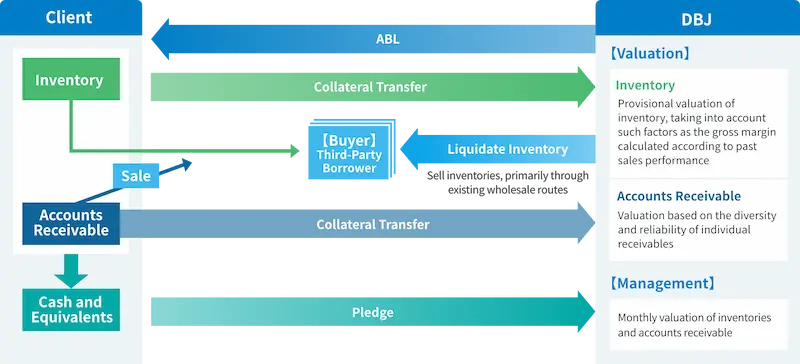
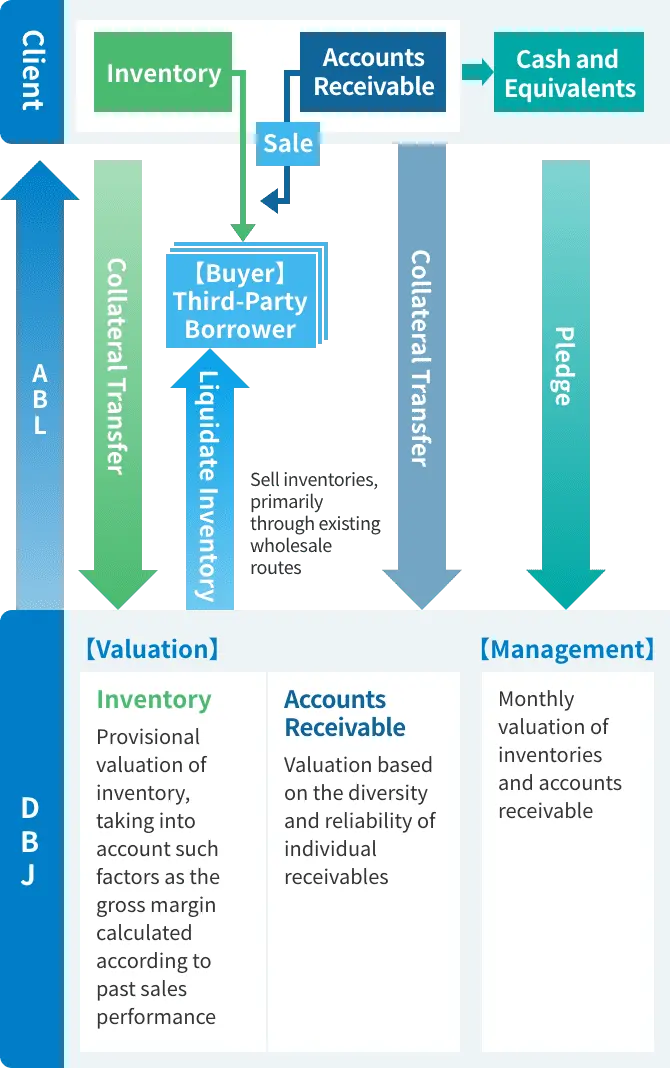
The diagram provides an overview of an asset-based lending, or ABL, transaction in which DBJ extends financing to the customer by taking collateral assignments over the customer's inventory and accounts receivable, as well as pledges over its cash and deposits. It describes how DBJ evaluates and monitors the inventory and accounts receivable, and traces the flow of sales to account debtors as well as the process of inventory disposition.

Case examples for Asset-Based Lending (ABL)

News releases on Asset-Based Lending (ABL)

Research reports on Asset-Based Lending (ABL)